
Automatic vs Quartz: Which Lasts Longer?
It's a fair question to ask before buying any watch: how long is this actually going to last?
With a well-cared-for wood watch, the timber casing itself can look great for 10 to 20 years or more. But the true lifespan of the timepiece depends heavily on what's ticking away inside it — and that comes down to whether you've chosen an automatic mechanical movement or a quartz battery movement.
Every Luminius watch, automatic or quartz, is backed by a 7-year warranty, which reflects real confidence in the materials and engineering inside each piece. But warranty length aside, the two movement types age in genuinely different ways over the long term, and it's worth understanding those differences before you decide which suits you.
Lifespan at a Glance
| Feature | Automatic Models | Quartz (Battery) Models |
|---|---|---|
| Typical lifespan | Indefinite, with regular servicing | Around 20 to 30 years |
| Primary failure point | Dried internal lubricants | Degraded circuitry or battery leakage |
| Maintenance needs | Mechanical service every 5–10 years | New battery every 2–3 years |
| End of life | Can almost always be repaired | Often unfixable once chips are discontinued |
Why Automatic Watches Can Outlast Almost Anything
An automatic watch like the Luminius Blacksmith or The Biscuit is, mechanically speaking, a fairly simple machine: gears, springs, and small jewelled bearings, with no electronics anywhere inside. That simplicity is exactly why these movements can last so long. Without a circuit board or battery to degrade, there's nothing inside that can suffer the kind of electrical failure that eventually retires a quartz movement.
If an automatic watch slows down or stops decades from now, a qualified watchmaker can fully disassemble it, clean every component, re-oil the gear train, and reassemble it to running condition again. This is precisely why mechanical watches are so often passed down between generations — a grandfather's automatic watch can, in principle, still be running perfectly when it's handed to a grandchild. The British Horological Institute, a leading authority on watch and clock mechanics, offers a good explanation of why mechanical movements are so well suited to long-term servicing and repair.
The Limitations of Quartz Movements
Quartz watches use a small circuit board and an electronic oscillator to keep remarkably accurate time, and for day-to-day reliability, they're hard to beat. But microelectronics don't last forever. Over roughly 20 to 30 years, exposure to humidity, temperature swings, and simple age can cause the internal circuitry to degrade.
Once that circuit board fails, or the specific factory components used in it are no longer manufactured, the movement generally can't be repaired and needs to be replaced outright. It's a similar story to a lot of consumer electronics: brilliant while it works, but ultimately disposable once the electronics age out. None of this makes quartz a poor choice — it simply means the watch's lifespan is tied to its electronics rather than its mechanics.
What About the Timber Casing Itself?
Wood is a living material, and it behaves a little differently to a traditional stainless steel case. Natural timber is sensitive to extremes of moisture and rapid temperature change — leaving a wood watch on a car dashboard during a typical Australian summer, for example, is one of the quickest ways to cause the timber to expand, contract, and eventually crack.
This is one of the reasons Luminius reinforces many of its cases with an internal stainless steel core. The steel core absorbs the everyday knocks and structural stress that pure timber alone can struggle with, particularly around the band links and lugs, while the wood exterior keeps its natural grain and feel. It's a simple addition that meaningfully extends how long the case itself holds up, regardless of which movement sits inside it.
Beyond that, good care goes a long way: avoid prolonged direct sun exposure, keep the watch dry when possible, and store it somewhere with reasonably stable humidity when it's not being worn. For more detail on keeping the timber in top condition, our guide to caring for your wooden watch covers this in full. Treated this way, the timber casing on a quality wood watch will comfortably outlast most fashion accessories on the market.
Getting the Best of Both Worlds
For buyers who want the mechanical longevity of an automatic movement without sacrificing structural durability, models like The La Rosa or The Mariner combine an automatic movement with an internal steel-reinforced case. You get a movement that can theoretically run for generations, housed inside a frame built to handle the everyday bumps and knocks that pure timber alone might not.
Know Your Consumer Rights
Beyond any manufacturer's warranty, Australian consumers are also protected by automatic consumer guarantees under Australian Consumer Law, which require products to be of acceptable quality and to last a reasonable amount of time given their price and nature. You can read more about how these guarantees work directly from the ACCC's consumer rights and guarantees page. It's a useful resource to understand what protection you have regardless of which brand or movement type you choose.
So, Which Should You Choose?
If long-term heirloom value and mechanical craftsmanship matter most to you, an automatic movement is hard to beat — it's a watch that can theoretically be serviced and kept running indefinitely. If you'd prefer lower day-to-day maintenance and excellent accuracy without thinking about it, quartz remains an excellent and reliable option for two to three decades of regular wear. Either way, with a 7-year warranty behind it and reasonable care for the timber casing, a Luminius wood watch is built to be worn for the long haul.
Frequently Asked Questions
How long does a Luminius watch last?
The timber casing typically looks great for 10 to 20+ years with proper care. Automatic movements can run indefinitely with periodic servicing. Quartz movements generally last 20 to 30 years.
What warranty comes with a Luminius watch?
Every Luminius watch, automatic or quartz, is covered by a 7-year warranty.
Why did my quartz watch stop working after many years?
This is usually due to the internal circuitry degrading with age, rather than a simple battery issue. Once the electronics fail, the movement typically can't be repaired.
Can an automatic watch really last forever?
With regular wear and a mechanical service every 5 to 10 years, yes — there's no inherent expiry point for a well-maintained mechanical movement.
How do I protect the wooden case from damage?
Avoid leaving the watch in direct sun or extreme heat, such as on a car dashboard, and try to keep it away from prolonged moisture exposure when not being worn. A small amount of natural oil rubbed into the timber now and again can keep the wood going for decades.
View Our Collections
-
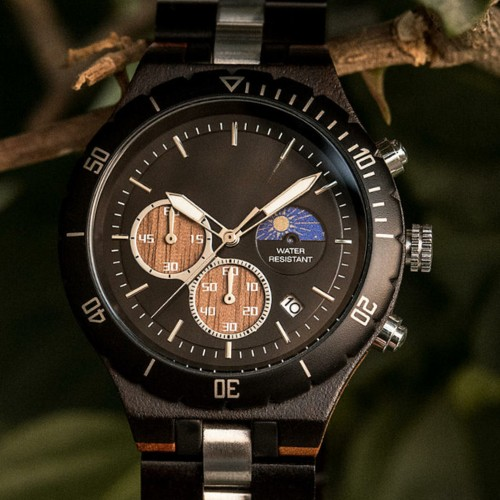
A Watch for Him
Stylish wood watches for men inspired by nature. Our men's fashion watch...
-
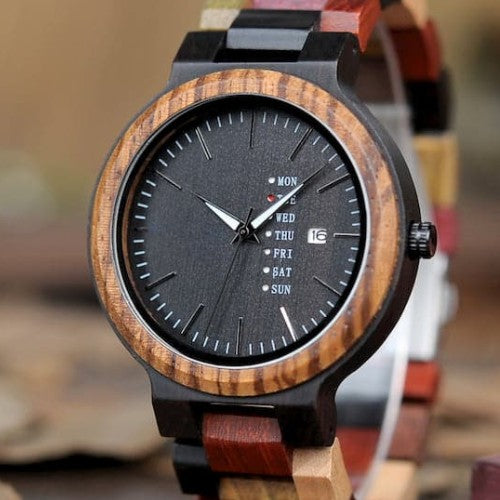
A Watch for Her
Our select women's wooden watches are ideally suited to the Australian lifestyle....
-
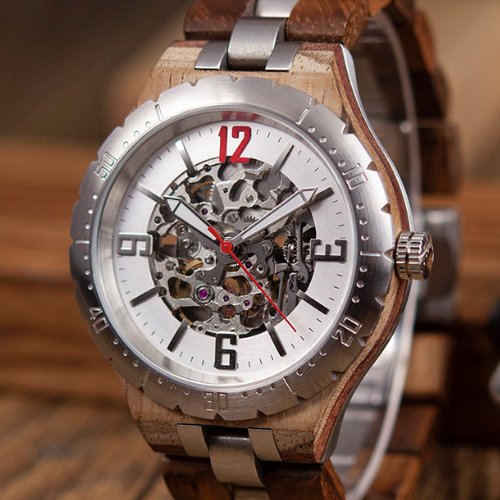
Kinetic Watches
Genuine automatic wood watches for men and women. Also known as self-winding...
-
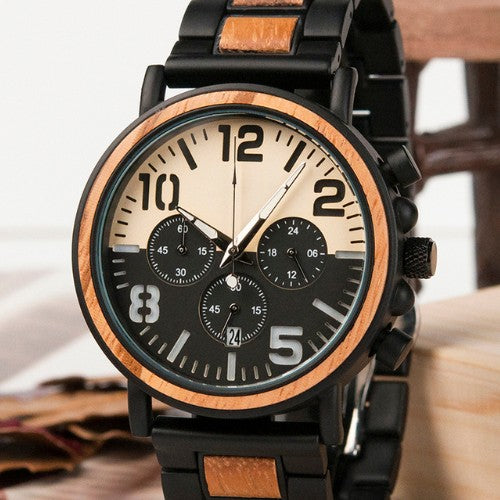
Quartz Watches
Our quartz wood watches use renowned Japanese quartz crystal movement to keep you...
