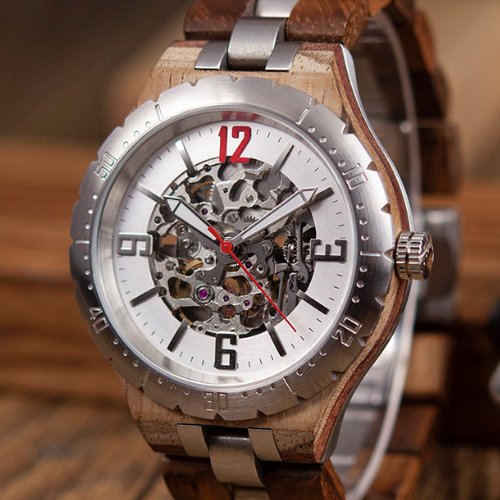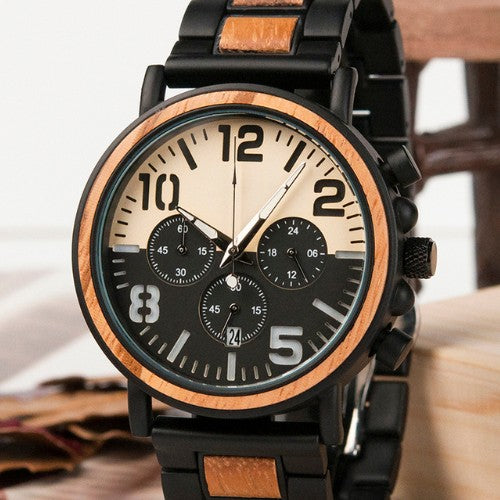
Designing and Creating Our Wooden Watches

At Luminius, a watch is more than a way to check the time. It carries a little of the patience, skill, and wonder that went into making it. Every Luminius watch begins with two things: the discipline of mechanical engineering, and the quiet wisdom found in the natural shape and grain of timber.
The Hands Behind Every Watch
The production of a single Luminius watch involves seasoned craftsmen and watchmakers from the Netherlands and Spain, and experienced watchmakers and woodworkers from the villages of Bao'an, in Shenzhen, China, each contributing a different part of the process before a piece is ever considered finished.
These villages have a long history of wood-carving and traditional craftsmanship. Guanlan and Fenghuang, two of Bao'an's historic villages, still hold Hakka ancestral homes and Yuan and Ming dynasty brick-and-wood structures, their beams and doorframes carrying joinery techniques passed down through generations. Dashuitian, a 300-year-old Hakka settlement nearby, sits at the heart of that same artisan community, a genuine home of craft rather than a factory floor.
Skilled hands don't belong to any one country. They belong to the people who've spent a lifetime getting good at something, wherever in the world that happens to be, and it's that collaboration, across continents and generations of craft, that every Luminius watch is built on.
The Art of Watchmaking
The watchmakers behind each Luminius piece spend years mastering the assembly of both automatic and quartz movements, tiny worlds of gears, springs, and crystal, each piece placed with real precision. It's slow, careful work, the kind that can't be rushed without losing the accuracy the whole watch depends on.
Watchmaking itself didn't appear from nowhere. The earliest mechanical concepts (gears, levers, oscillation, balance) were all worked out by people studying the natural rhythms around them: the swing of a pendulum, the steady tick of a heartbeat, the predictable cycles of the sun and stars. In a real sense, mechanical watchmaking is humanity's attempt to bottle a little of nature's own precision and wear it on the wrist.
Where Engineering Meets Timber
Once the movement is ready, it needs a home, and that's where the timber comes in. Every piece of wood used carries its own grain, its own colour variation, its own small imperfections that make it unmistakably itself. No machine could replicate it, because nature never repeats itself exactly.
World-class cutting technology, the same precision behind the movement itself, brings each case to its exact shape and readies it to hold a mechanism with almost no room for error. But timber doesn't leave that process finished. Every blank still needs a human eye to decide how far to sand back, where a mark in the grain becomes a feature rather than a flaw, how to coax out the warmth sitting just beneath the surface. That's a judgement no machine has learned to make, and it's the quiet difference between a case that is merely accurate and one that feels alive on the wrist.
Each case is shaped to let that natural character show through, rather than being sanded into uniformity. It's part of why two Luminius watches, even from the same collection, are never quite identical. The watch you receive is the only one exactly like it in the world.
Thoughtfully Sourced Timber
Timbers are chosen carefully, ebony, sandalwood, walnut, zebrawood, olive wood, and others, selected for grain, density, and how each species will look and wear over years of daily use.
Reclaimed and responsibly sourced wood is favoured wherever possible. It's not something that's led with or made into a big deal, it's simply a preference for materials worth feeling good about.
The Watchmaking Process
Concept and Design
Every watch starts as a concept. Designers and watchmakers work through the shape of the case, the layout of the dial, and the character the finished piece is meant to have, long before any timber is cut.
Selection of Timber
The chosen timber is inspected individually, wood doesn't come off a production line. Each piece is assessed for grain quality, density, and the particular character it will bring to the finished watch.
Preparation
The timber is cut to precise dimensions using the same exacting technology behind the movement itself, then finished entirely by hand: sanded, oiled, and buffed until the grain is allowed to show its true depth rather than be flattened into sameness.
Where additional structural confidence is needed, a stainless steel core is fitted internally, taking the load off the timber without changing its appearance on the wrist.
Assembly
This is where patience matters most. The case is shaped and finished, the dial and movement fitted with precision, and the band attached last. It's unhurried, deliberate work, the kind that produces something you can feel when you put the watch on for the first time.
Quality Control
Before any watch is ready to leave the workshop, it's checked thoroughly: timekeeping accuracy is tested, every component is inspected, and the overall finish is reviewed against the standard the Luminius name stands for. Each piece that reaches you has earned its place there.
Packaging
Every Luminius watch is presented in a wooden gift box, a fitting introduction to a piece crafted from timber. It arrives ready to wear, or to give.
A Legacy Worth Carrying
Luminius is built on a simple belief: that the best engineering often borrows its wisdom from nature, and that a watch made this way, by seasoned watchmakers, with real timber, and real mechanical craft, carries something a mass-produced piece never quite can. Precision brings the case to life; patience is what makes it worth keeping.
With every watch backed by a 7-year warranty, it's built to be worn, lived in, and carried with you for a very long time.
Explore our full range of wood watches for men and women, or learn more about the timbers used and what makes each one distinctive.
View Our Collections
-
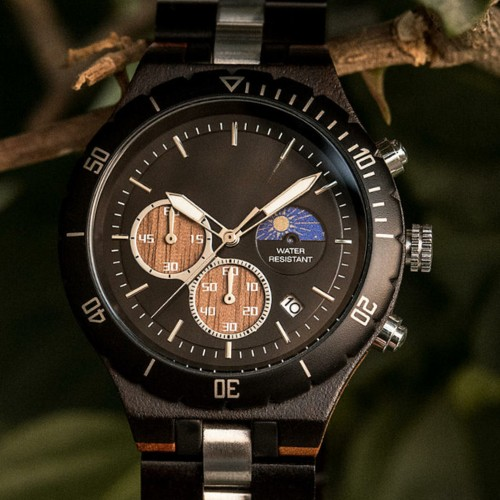
A Watch for Him
Premium and limited-edition men's wood watches. Our men's wood watch selection is...
-
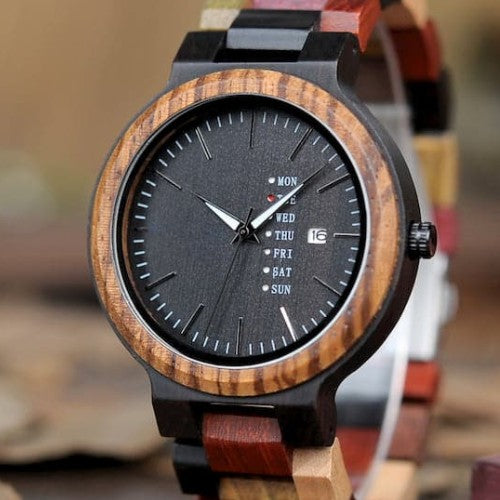
A Watch for Her
Our select women's wooden watches are ideally suited to the Australian lifestyle....