
Are Wood Watches Durable? A Buyer's Guide
If you're weighing up a wood watch, there's a good chance one question is sitting at the back of your mind: will it actually hold up? It's a fair concern. Wood isn't steel, and a watch you're wearing every day needs to survive knocks, weather, sweat and the occasional rough handling without falling apart.
The honest answer is that durability comes down almost entirely to how the watch is built, not just what it's made from. Here's a clear look at the real concerns people have, and how well-built wood watches address each one.
The Real Concerns Buyers Have
Will it scratch, chip or split?
Wood is softer than stainless steel, so this is a fair worry. Cheaper, lightweight timbers can be prone to chipping at the band links or lugs under pressure. Denser hardwoods like ebony, black sandalwood and walnut hold up far better, and a steel-reinforced case removes most of this risk entirely.
What about water?
Wood is porous, so most wood watches are splash and sweat resistant rather than fully waterproof. Full submersion, swimming or showering isn't recommended, since trapped moisture can cause the timber to swell or warp over time.
Is it actually real wood?
This is a legitimate concern in the category. Some budget watches use a printed wood-grain laminate over plastic rather than genuine timber. If a listing doesn't name the wood species, or the grain looks suspiciously uniform across every unit, that's usually a sign it isn't the real thing.
Does it need special care?
A little, yes. Unlike a steel watch, timber benefits from being worn regularly (the natural oils from your skin help condition it) and an occasional drop of oil every few months keeps it from drying out. It's a small habit, not a burden.
Will it suit a wider range of outfits?
Wood has a distinct, earthy look, so it won't disappear into a formal outfit the way plain steel does. Most people find this a feature rather than a flaw — it's part of why a wood watch gets noticed — but it's worth knowing it has a stronger personality than a typical metal watch.
Can it handle an active lifestyle?
Wood watches aren't designed for high-impact sport or constant water exposure. For office wear, travel, and everyday use, a well-built watch handles daily knocks comfortably. For heavy outdoor or physical work, a steel-reinforced model is the better choice.
Pure Wood vs Steel-Reinforced: Which Should You Choose?
| Approach | Best Woods | Maintenance | Best For |
|---|---|---|---|
| Pure wood | Ebony, black sandalwood, walnut | Regular oiling, avoid water | Light, everyday wear; those with metal allergies |
| Steel-reinforced | Any timber, including lighter woods | Low — the steel core protects the timber | Daily active wear, travel, hands-on work |
If your main hesitation is structural durability, a steel-reinforced case removes that worry almost entirely. The internal frame absorbs the everyday knocks, while the timber exterior keeps its natural look. Several of our automatic models are built this way, pairing a steel core with genuine timber.
If you'd rather go with pure hardwood for the lightest possible feel, sticking to dense woods like ebony or sandalwood, and giving it the occasional drop of oil, will keep it looking sharp for years. Our guide on caring for your wooden watch covers this in more detail.
How Australian Wood Watch Brands Compare
It's worth seeing how different brands approach durability, since the solutions vary quite a bit:
| Brand | Primary Approach | Best For |
|---|---|---|
| Luminius | Steel-reinforced casing on select models | Structural toughness for daily wear |
| Jenta Bay | 3 ATM splash protection, dense hardwoods | Traditional dress watch styling |
| Cowan Brown | Wood case paired with a leather or suede band | Minimalist, modern look |
At Luminius, we split our range between dense pure hardwoods for a light, natural feel, and steel-reinforced cases for buyers who want the timber look with extra structural confidence. Either way, every watch is backed by a 7-year warranty.
The Bottom Line
A well-made wood watch is more durable than people often assume, provided you know what to look for: a named, genuine timber species, a steel core if structural toughness matters to you, and a small amount of regular care. Treated this way, a wood watch is a piece you can wear daily for years, not a fragile novelty — which also makes it a dependable choice if you're buying one as a gift.
Frequently Asked Questions
Are wood watches durable enough for daily wear?
Yes, particularly steel-reinforced models or those made from dense hardwoods like ebony or walnut. Both are built to handle everyday knocks comfortably.
Can wood watches get wet?
Most are splash and sweat resistant, but not fully waterproof. Avoid swimming or showering with one on.
How do I know if a wood watch is genuine timber?
Check that the listing names a specific wood species. Uniform, repeating grain patterns across multiple units is a sign of a printed laminate rather than real wood.
Do wood watches need special maintenance?
A little. Wearing it regularly and applying a drop of natural oil every few months keeps the timber from drying out.
Is a steel-reinforced wood watch better than pure wood?
It depends on your priority. Steel-reinforced models offer more structural durability, while pure hardwood models are lighter and more hypoallergenic.
View Our Collections
-
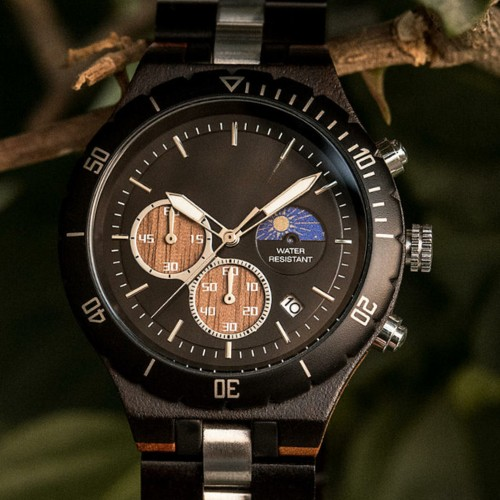
A Watch for Him
Stylish wood watches for men inspired by nature. Our men's fashion watch...
-
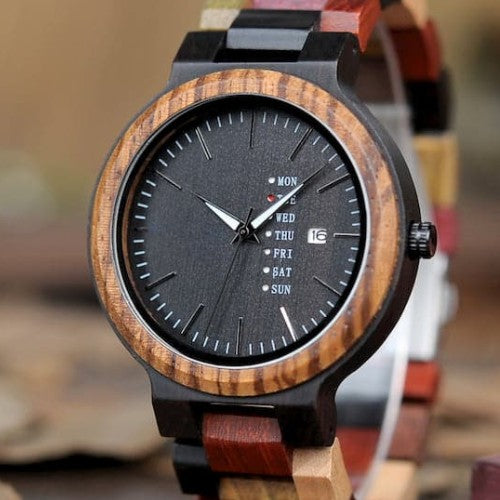
A Watch for Her
Our select women's wooden watches are ideally suited to the Australian lifestyle....
-
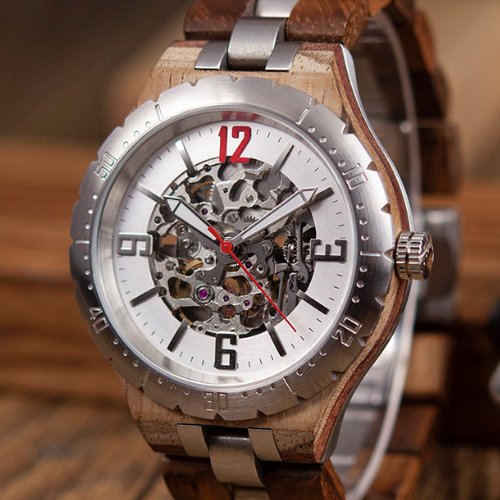
Kinetic Watches
Genuine automatic wood watches for men and women. Also known as self-winding...
-
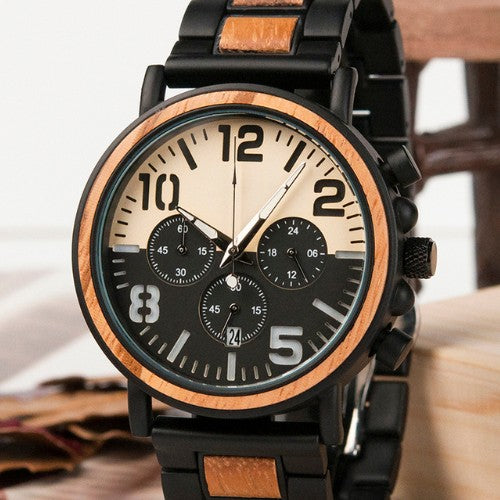
Quartz Watches
Our quartz wood watches use renowned Japanese quartz crystal movement to keep you...
