Wood Watches: A Premium Watch or a Novelty?

If you’ve been drawn to wood watches, the natural grain, the warmth, the lighter feel, the sense of wearing something shaped by nature, that instinct is worth trusting.
A wood watch is not automatically a gimmick, nor is it automatically premium. Like most things, quality matters. The real question is not whether wood watches have value. It is what separates a well-made wood watch from a cheap novelty piece.
At the quality end of the market, wood watches can be distinctive, meaningful, and beautifully made. They offer something different from a standard metal watch without sacrificing the essentials of reliable timekeeping.
Wood and Watchmaking Have a Long History
Wood is not a new or experimental material in watchmaking. In fact, it is one of the oldest.
The earliest pocket watches, dating back to the 16th century, often used wooden cases to protect their delicate inner mechanisms. Wooden wheels and gears were also common in early timepieces, chosen because they could be shaped accurately when consistent metalwork was harder to achieve at scale.
The modern wood watch, timber casing paired with a quality quartz or mechanical movement, has been part of the watch market since the early 1980s. That gives the category more than 40 years of history.
Trends usually come and go quickly. The wood watch has outlasted digital watch crazes, smartwatch fashion cycles, and countless accessory fads.
A watch bursting with personality that continues to find an audience after four decades is something people continue to value.
Not All Wood Watches Are the Same
There is a low end in the wood watch market. These are often lightweight novelty pieces with unbranded movements, low-grade materials, or printed wood-grain laminate over plastic. They may look interesting at first, but they are not designed for long-term wear.
A well-made wood watch is a very different product.
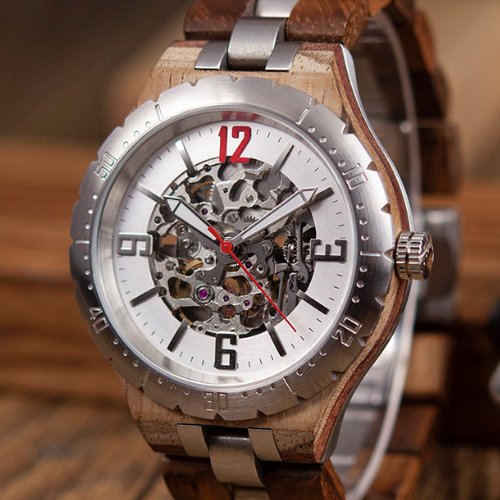
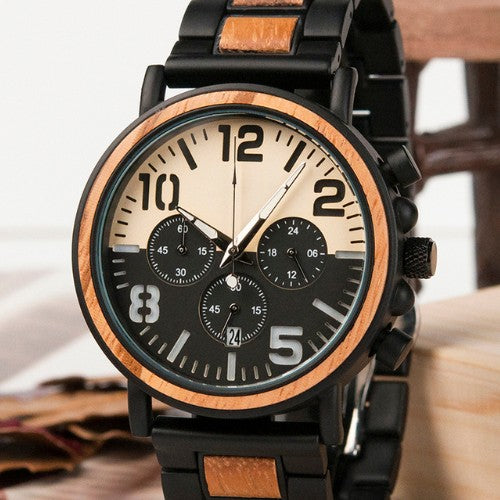
Quality wood watches use genuine, named hardwoods such as ebony, walnut, zebrawood, or rosewood. Each piece of timber has its own natural grain, which means no two watches are the same.
The best designs also combine timber with practical engineering. A stainless steel core helps carry the structural load. A recognised Japanese quartz movement or genuine automatic movement provides reliable timekeeping. Hardened mineral or Hardlex crystal protects the dial.
A meaningful warranty, such as our 7-year warranty, shows confidence in the materials, craft, and quality.
That's precision engineering, housed in one of the most naturally beautiful materials available.
The craft matters too. Selecting the timber, machining it to watchmaking tolerances, and pairing it with a movement built to perform for years is not a trivial process. Done well, a wood watch is both functional and deeply personal.
It Comes Down to Why You’re Buying It
The question of whether a wood watch is “worth it” often depends on the purpose behind the purchase.
A low-cost accessory bought on impulse for a particular outfit or event can be perfectly fine for what it is. But it is different from a watch chosen carefully for a milestone birthday, anniversary, wedding, retirement, or personal achievement.
The same is true of many meaningful gifts. A simple bracelet bought for one night out and a bracelet given by a parent for a 21st birthday may both be bracelets, but they carry entirely different weight. One is a temporary accessory. The other becomes part of a person’s story.
A quality wood watch has that same potential.
When it is chosen with care, engraved with a date or message, and given for an occasion that matters, it becomes more than something worn on the wrist. It becomes a keepsake. It marks a moment. It carries memory.
That is where a quality wood watch separates itself from a novelty item. If something is worth engraving, worth gifting for a significant occasion, and worth keeping for years, it is not a gimmick.
The intention behind your purchase gives meaning as well as being a quality watch.
The Longevity Test
Gimmicks rarely age well. A quality wood watch can.
Dense hardwoods such as ebony and walnut are naturally durable. Over time, they can develop a richer patina through regular wear, giving the watch more character rather than simply making it look worn out.
A skilled watchmaker can service a genuine automatic movement over the long term. A quality quartz movement can provide dependable everyday timekeeping for years. Personal engraving on the case back remains part of the watch for as long as the watch exists.
These are the qualities of something people keep, wear, give as gifts, and remember.
For a closer look at movement choice, our resource on choosing automatic or quartz watches explains how each option differs in feel, maintenance, accuracy, longevity, and long-term meaning. And if you are comparing Australian watch brands more broadly, our guide to Australia’s top watch brands offers helpful context.
So, Are Wood Watches a Gimmick?
Some are. The cheapest wood-look watches are often novelty accessories, made to be bought quickly and replaced without much thought.
But a quality wood watch is different.
At the premium end, wood watches combine genuine hardwood, reliable watch movements, thoughtful construction, natural character, and personal meaning. They are not trying to imitate a metal watch.
Wood watches offer something metal watches often lack: warmth, individuality, and a direct connection to natural materials.
So if your instinct says there is something special about a wood watch, you are not wrong. The key is knowing which end of the market you are looking at.
Choose genuine timber. Look for a named movement. Check for strong construction. Pay attention to the warranty. And if you are buying it as a gift, consider engraving it with something that will still matter years from now.
A well-made wood watch is not a passing novelty. It's a genuinely practical, memorable watch, especially when chosen with care.
Frequently Asked Questions
Are wood watches real watches?
Yes. Quality wood watches use genuine Japanese quartz or automatic mechanical movements, the same types of movements found in respected metal watches. The timber forms the case and the watch’s design. It is not a substitute for the mechanism inside.
How long have wood watches been around?
Watchmakers have used wood in timepieces since the 16th century. Modern wood watches have been part of the market since the early 1980s, giving the category more than 40 years of continuous history.
Do wood watches last?
A quality wood watch can last for years with proper care. Look for genuine hardwood, a steel-reinforced case, a reliable movement, durable crystal glass, and a meaningful warranty.
Over time, dense hardwoods such as ebony and walnut can develop a richer character, giving the watch more warmth and individuality with wear.
How can I tell a quality wood watch from a cheap one?
Check whether the brand clearly names the timber species, identifies the movement, reinforces the case structure, and backs the product with a meaningful warranty.
Cheap novelty watches often use vague material descriptions, unbranded movements, and little or no warranty support.
Are wood watches a good gift?
Yes, especially for meaningful occasions. A quality wood watch with personalised engraving can make a memorable gift for milestone birthdays, anniversaries, weddings, retirements, graduations, or other significant events.
A wood watch is the kind of gift that just feels personal.
View Our Collections
-
A Watch for Him
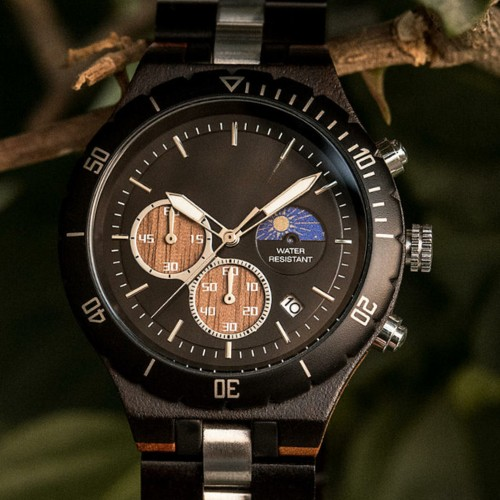
Premium and limited-edition men's wood watches. Our men's wood watch selection is...
-
A Watch for Her
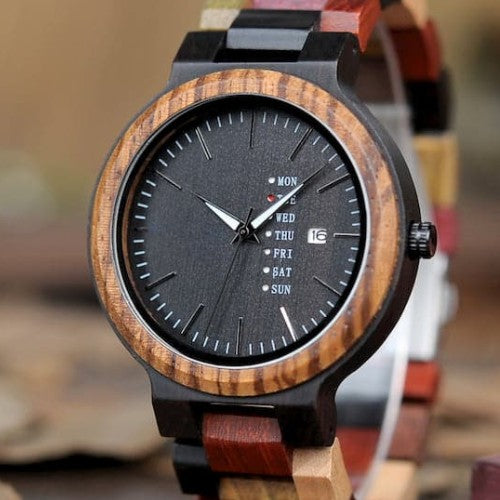
Our select women's wooden watches are ideally suited to the Australian lifestyle....