Automatic vs Quartz: Which is Right for Me?

If you're drawn to the idea of a wood watch as something worth buying, perhaps even something to pass on eventually, you're already asking the right question. Do you choose an automatic or a quartz movement? What's the difference, and which wood watch is right for you?
Every Luminius watch, automatic or quartz, is backed by a 7-year warranty. But beyond the warranty, the two movement types tell very different stories over the long term, and understanding those differences helps you choose the one that suits what you're actually looking for.
Lifespan at a Glance
| Feature | Automatic Models | Quartz (Battery) Models |
|---|---|---|
| Typical lifespan | Indefinite, with periodic servicing | Around 20 to 30 years |
| Primary failure point | Dried internal lubricants | Degraded circuitry or battery leakage |
| Maintenance needs | Mechanical service every 5–10 years | New battery every 2–3 years |
| End of life | Almost always repairable | Often unrepairable once chips are discontinued |
Why Automatic Watches Can Last Generations
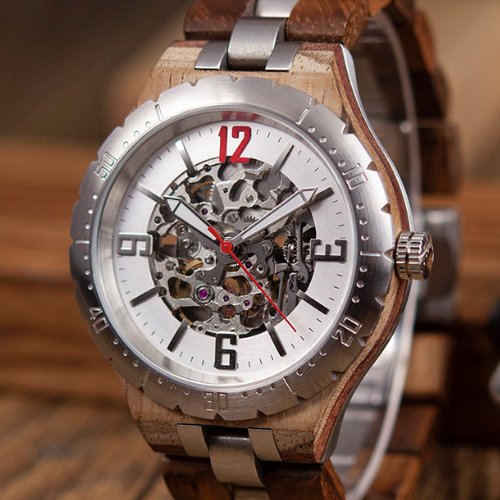
An automatic watch is a mechanical instrument with no electronics inside. Gears, springs, jewelled bearings, and a weighted rotor that winds the mainspring through the natural movement of your wrist. That's all. That simplicity is exactly why these movements are so extraordinarily long-lived.
When a quality automatic watch slows down decades from now, a watchmaker can fully disassemble it, clean every component, re-oil the gear train, and return it to running condition.
This is precisely why mechanical watches are the watches that get passed down, a well-maintained automatic is, in principle, a watch without a natural end. The British Horological Institute, a leading authority on mechanical watchmaking, explains well why this kind of movement is so suited to long-term service and repair.
There's also something compelling about wearing a watch powered entirely by the movement of your own wrist, no battery, no charging, no dependence on anything external. Just the quiet, continuous turning of a mechanism that's been perfecting itself for centuries.
What Quartz Movements Do Well
Quartz movements offer exceptional accuracy and very low day-to-day demands, a battery every two to three years and little else to think about. For 20 to 30 years, a quality Japanese quartz movement will keep excellent time with almost no intervention required.
The long-term limitation is that microelectronics don't last indefinitely. Once the circuit board inside a quartz movement degrades with age, typically after several decades, or the specific components used in it are no longer manufactured, the movement generally can't be repaired and needs to be replaced.
It's a similar story to most consumer electronics: brilliant while it works, but ultimately tied to the lifespan of its components.
This doesn't make quartz a lesser choice. It simply means the two movements have different relationships with time. Quartz is lower-maintenance and more accurate. Automatic is repairable indefinitely and carries a different kind of meaning for those who value that.
The Timber Casing Itself
Whichever movement you choose, the timber surrounding it is built for the long term. Natural wood is sensitive to extremes, prolonged moisture, rapid temperature swings, leaving a watch on a hot car dashboard, but when treated with reasonable care, it visibly rewards that care.
Over time, the grain deepens. The colour becomes richer and more personal. A wood watch casing, properly cared for, will comfortably outlast most accessories on the market.
Many Luminius models reinforce the case with an internal stainless steel core, which absorbs the structural stress at the lug and link points that pure timber alone can struggle with over many years. The timber exterior looks and feels the same on the wrist, the steel simply makes the whole piece more resilient without changing what makes it distinctive.
For the full picture on keeping the timber in excellent condition, our guide to caring for your wooden watch covers everything worth knowing.
The Watch Worth Keeping
If the idea of handing a watch on, of it still being worn and admired in thirty or forty years, is part of what draws you to this decision, an automatic movement with a reinforced timber case is the clearest path to that outcome.
A movement that can be serviced indefinitely, housed in a casing that improves with age, backed by a 7-year warranty: it's built to outlast the question of whether it will last.
If what you want is accuracy and simplicity with very low maintenance, a quartz model gives you two to three decades of excellent performance with almost nothing to think about beyond the occasional battery.
Both automatic and quartz wooden watches are quality choices. The difference is in what you want the watch to mean over time.
Your Rights as an Australian Consumer
Beyond any manufacturer's warranty, Australian consumers are protected by automatic guarantees under Australian Consumer Law, which require products to be of acceptable quality and last a reasonable time given their price and nature.
The ACCC's consumer rights page covers these guarantees in detail.
Frequently Asked Questions
How long does a Luminius watch last?
The timber casing looks great for many years with proper care. Automatic movements can run indefinitely with periodic servicing. Quartz movements typically last 20 to 30 years.
What warranty comes with a Luminius watch?
Every Luminius watch, automatic or quartz, is covered by a 7-year warranty.
Can an automatic watch really last forever?
With regular wear and a mechanical service every 5 to 10 years, there's no inherent expiry point for a well-maintained mechanical movement.
Why did my quartz watch stop working after many years?
Usually, the internal circuitry degrades with age rather than a simple battery issue. Once the electronics fail, the movement typically can't be repaired.
How do I protect the wooden case?
Keep it away from prolonged moisture and extreme heat. A small amount of natural oil rubbed into the timber a few times a year keeps the wood in excellent condition for decades.
View Our Collections
-
A Watch for Him
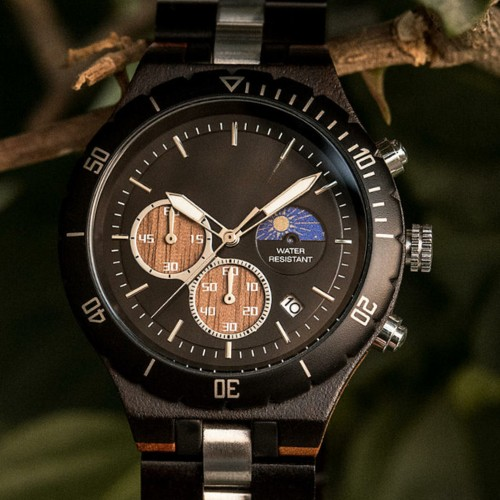
Premium and limited-edition men's wood watches. Our men's wood watch selection is...
-
A Watch for Her
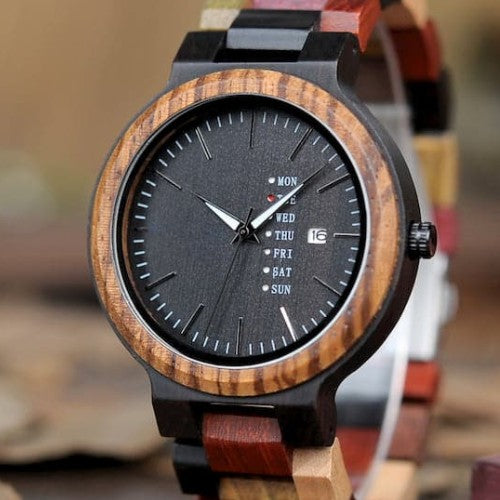
Our select women's wooden watches are ideally suited to the Australian lifestyle....