
How Wood Watches Are Made: From Timber to Timepiece
In an age of mass production, a wood watch stands apart. Each piece is shaped from natural timber, fitted with a precision mechanical or quartz movement, and assembled by skilled watchmakers who understand both materials and mechanics. But how exactly does a watch go from a piece of raw timber to something worn on a wrist?
Here's a step-by-step look at the process.
1. Selecting the Timber

Every wood watch begins with the timber selection. Watchmakers choose hardwoods not just for their appearance, but for their density, grain stability, and how they'll behave over years of daily wear. Common choices include walnut, ebony, zebrawood, sandalwood, and olive wood, each with its own visual character and physical properties.
The wood is dried to reduce its moisture content, typically to 6 to 8 percent, to prevent cracking and warping over time. In some cases, stabilisation with resin further improves strength and moisture resistance without altering the natural appearance of the grain.
2. Design and Prototyping
Designers begin with sketches or digital models, planning the overall shape, proportions and how the grain will sit within the finished case. This stage requires both creative and engineering precision, since a watch case must be ergonomic, structurally sound and visually balanced.
Prototypes are then created, sometimes using sample cuts from the chosen timber, to refine comfort, weight distribution and functional ergonomics before final production begins.
3. Cutting and Shaping
Once the timber is selected and the design is finalised, CNC machines or laser cutters carve precise pieces for the case, bezel, dial and strap links. The tolerances involved are tight, since a watch case must accommodate a precision movement with very little margin for error.
Some watchmakers also use hand-carving or steam-bending techniques for more traditional or curved designs. After cutting, the pieces are sanded, often by hand, to remove imperfections and bring out the natural grain.
4. Treatment and Finishing
To enhance the colour and protect the timber, natural oils, waxes or lacquers are applied. The goal is to preserve the organic texture and warmth of the wood while sealing the surface against minor moisture exposure and daily wear.
Where added protection is required, resin infusion techniques improve the wood's stability and resistance to humidity, particularly important for a piece designed to be worn every day in varying conditions.
5. Movement Installation and Assembly

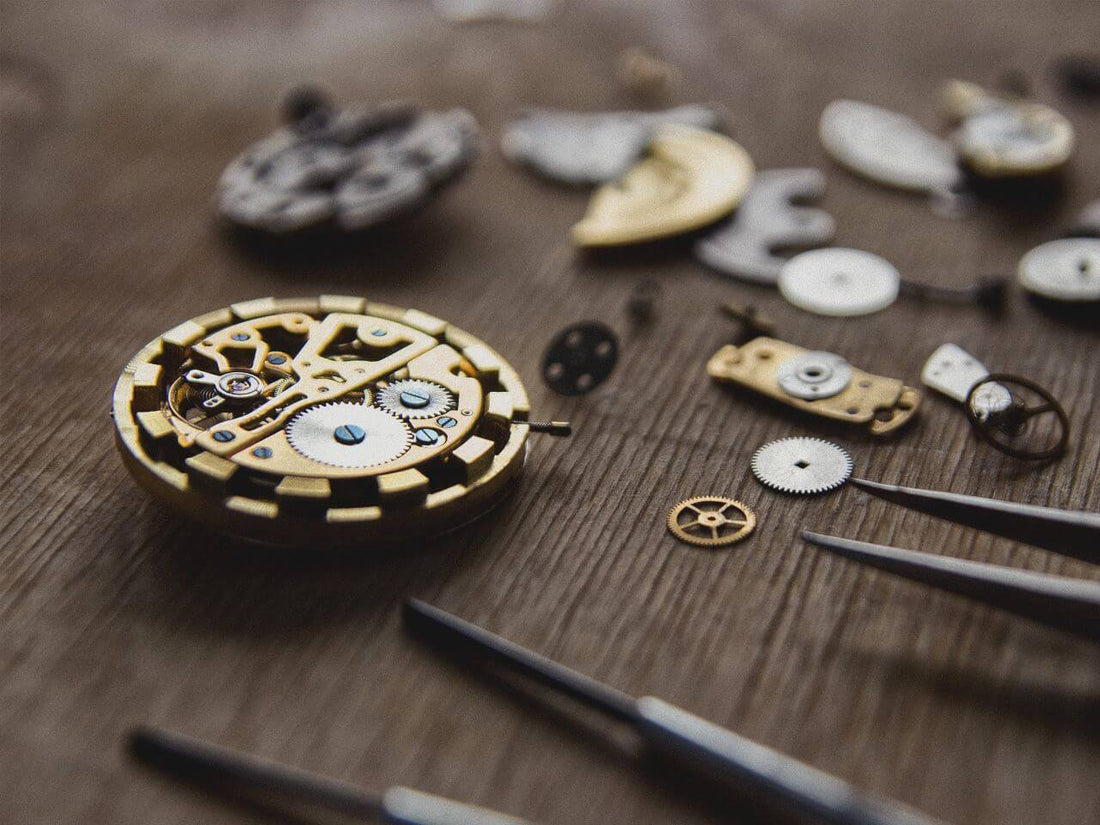
The exterior may be timber, but the heart of a wood watch is its movement. Luminius watches use either a genuine Japanese quartz movement, battery-operated with excellent accuracy, or an automatic, self-winding mechanical movement, powered entirely by the motion of the wearer's wrist.
The wooden case is carefully machined to precise dimensions so the movement fits securely. Watch hands, the dial, crystal glass and the crown are then fitted. Everything is assembled in a clean environment to prevent dust from affecting the movement.
The band, made from wooden links, a wood and stainless steel hybrid, or genuine leather, is attached using metal pins or screws for durability and flexibility.
6. Quality Control
Before a wood watch is ready to wear, it passes a series of quality checks.
- Timekeeping accuracy testing
- Alignment checks for hands and dials
- Splash resistance verification
- Aesthetic inspection for finish consistency, grain quality and even colouration
Any imperfections are corrected by hand. Every piece that leaves the workshop needs to meet the same standard regardless of the timber's natural variation.
7. Packaging
Each Luminius watch is packaged in a wooden gift box, a fitting finish for a piece crafted from timber. Packaging materials are chosen with care, and the presentation is designed to make a strong first impression whether the watch is a gift or a personal purchase.
Why the Process Matters
A wood watch made this way isn't a novelty piece assembled quickly from cheap materials. It's the result of a process that demands precision at every stage, from timber selection and drying, through machining and finishing, to movement installation and final inspection.
That's what separates a watch built to last for decades from one that won't survive a year of daily wear. For more on the thinking behind how our watches are designed, our page on designing and creating our wooden watches covers the philosophy behind every piece.